


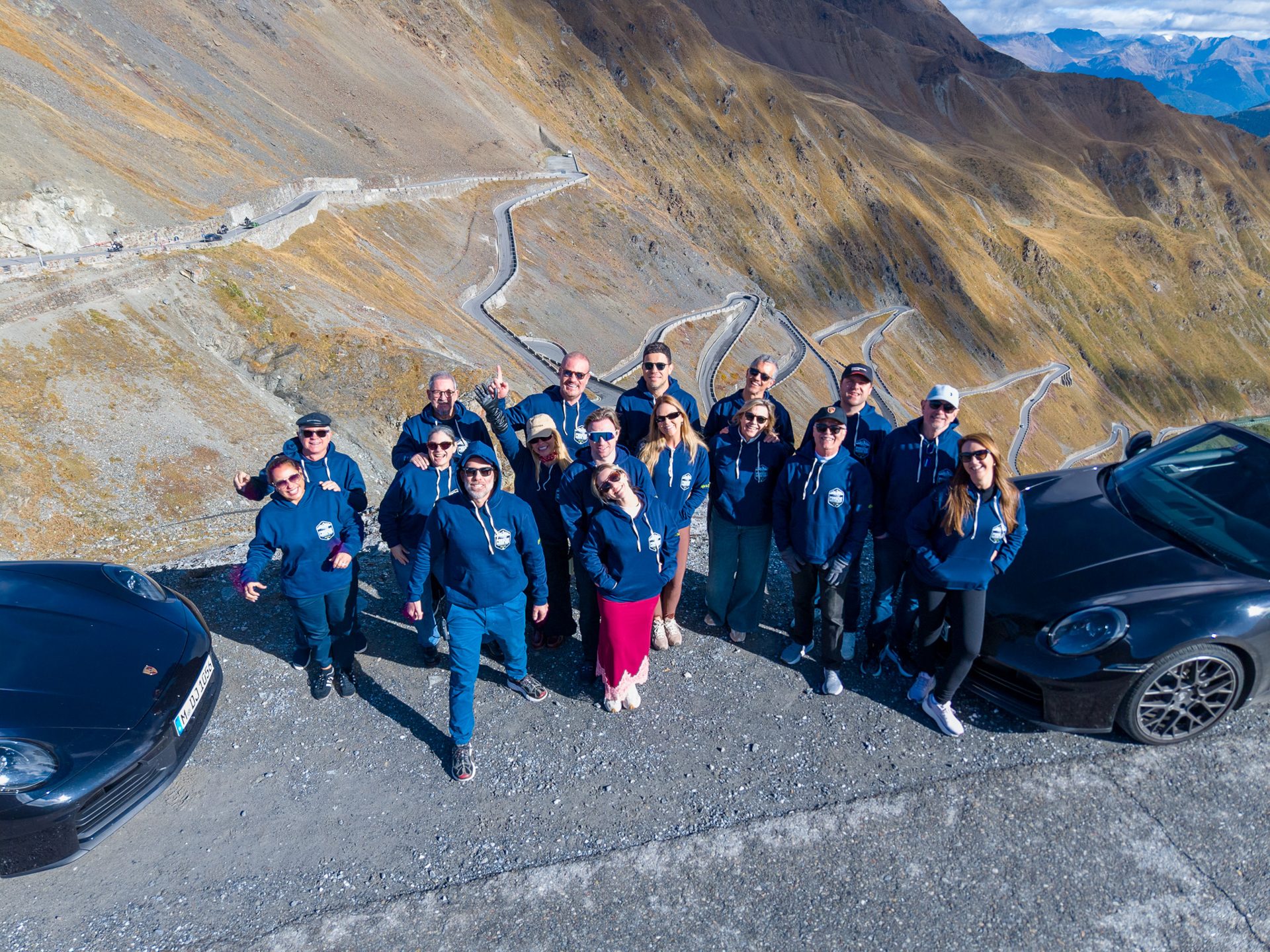
There is a wide gap between seeing an Alpine pass in a photograph and driving it in the right car, at the right pace, knowing the next pass is already booked. In October 2026 ROXMOTORS took nine Porsches across four countries and roughly 2,000 kilometres of Alpine passes, on the second edition of Legends of the Alps.
What follows is the story of that crossing — and, along the way, a guide to the roads that belong on any serious list of the best driving roads in the Alps.
The 2026 edition in numbers
- 10–19 October 2026 — 10 days, 9 nights, single departure
- ~2,000 km, entirely on tarmac
- 4 countries: Germany, Switzerland, Italy and Austria
- 9 Porsches, each fitted with a two-way radio
- Start and finish in Stuttgart, where the marque was born
- Support vehicle for luggage, plus professional photo, video and drone coverage throughout
The group met at the Motorworld complex in Stuttgart to collect the cars and share a welcome dinner. The next morning the route already pointed at Switzerland, with coffee at the Schloss Laufen viewpoint above the Rhine Falls, the largest waterfall in Europe.
Susten, Furka and Nufenen: all of Switzerland in one day
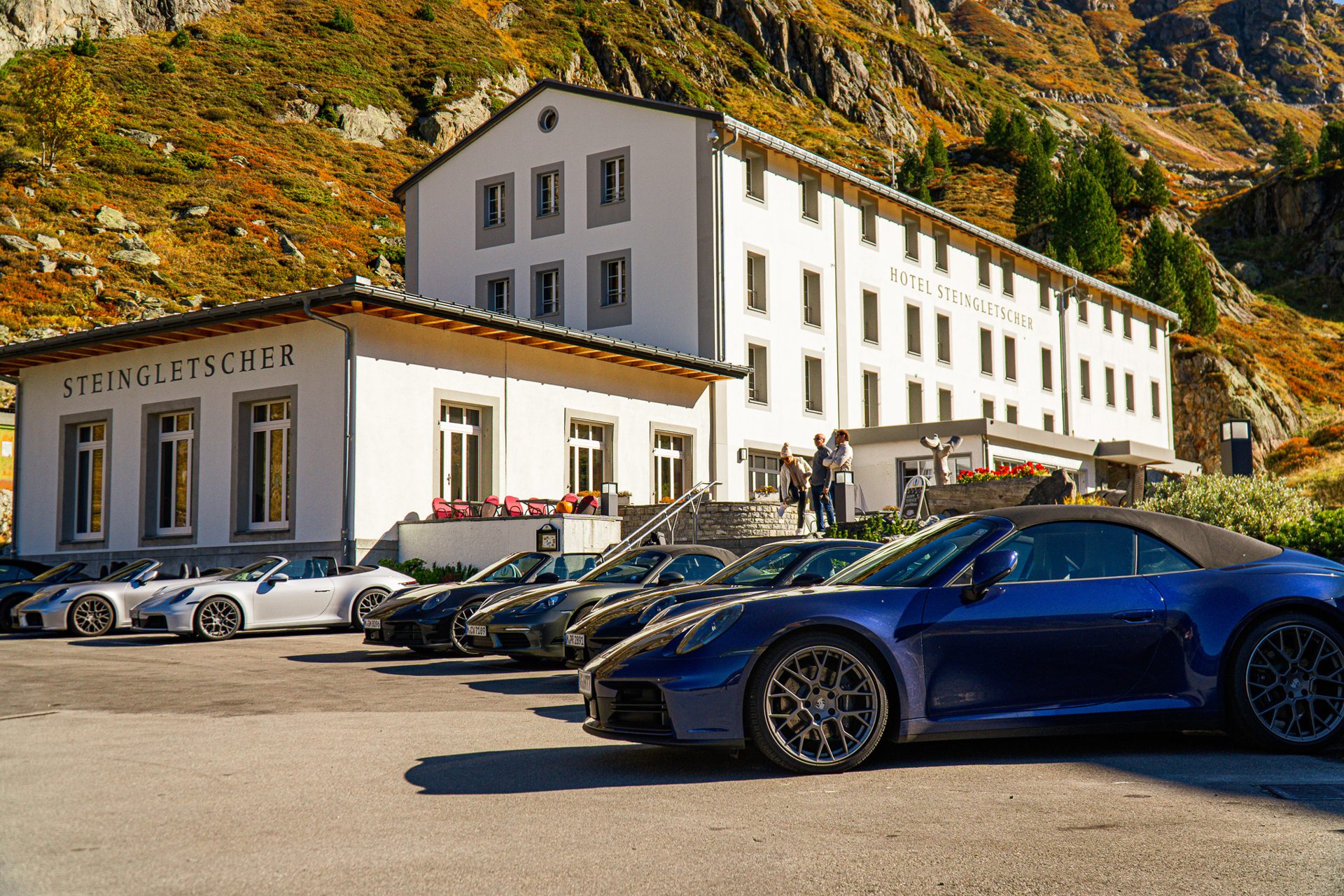
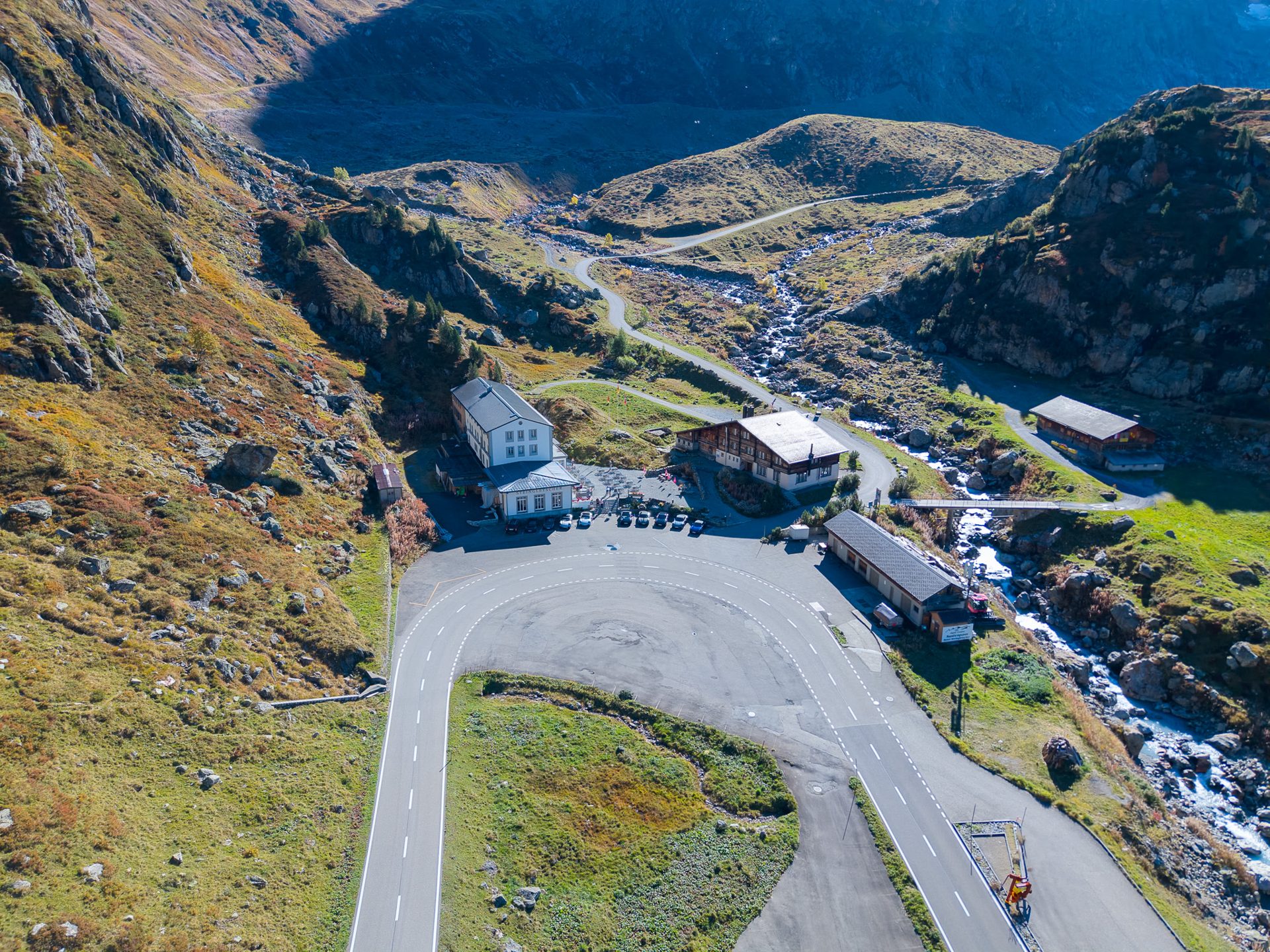
Day three is the first proper driving day, and it does not hold back: three Swiss passes back to back, leaving Lucerne and ending in the Mediterranean climate of Lake Maggiore.
Susten (2,224 m) opens the account, and it has a quirk worth knowing: it was one of the first Alpine passes designed with the motor car in mind rather than the horse cart. You feel it in the radius of the corners, wider and far more consistent than on any neighbouring road. The obligatory stop is the Hotel Steingletscher, facing the Stein glacier.
The Hotel Belvédère hairpin
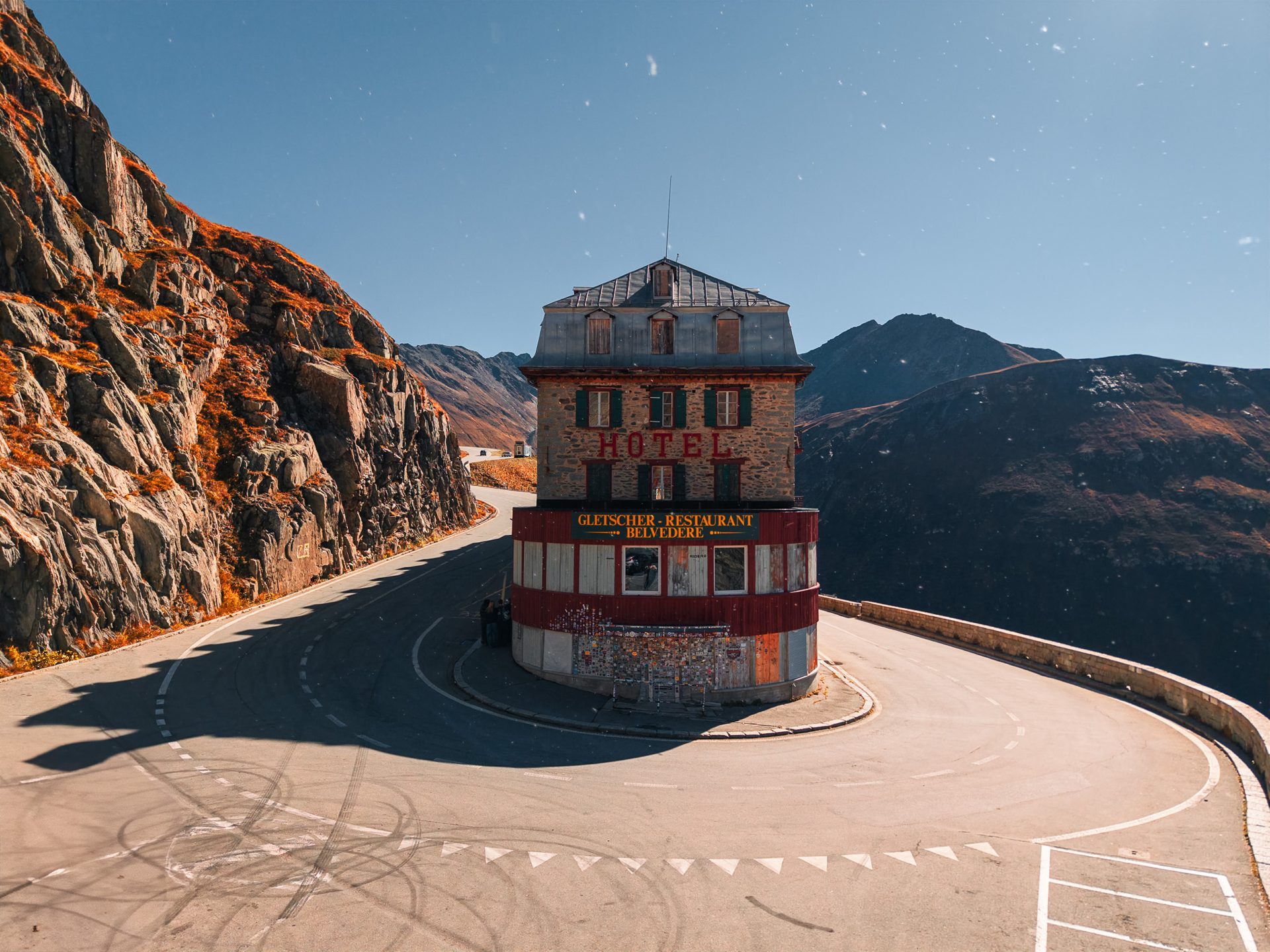
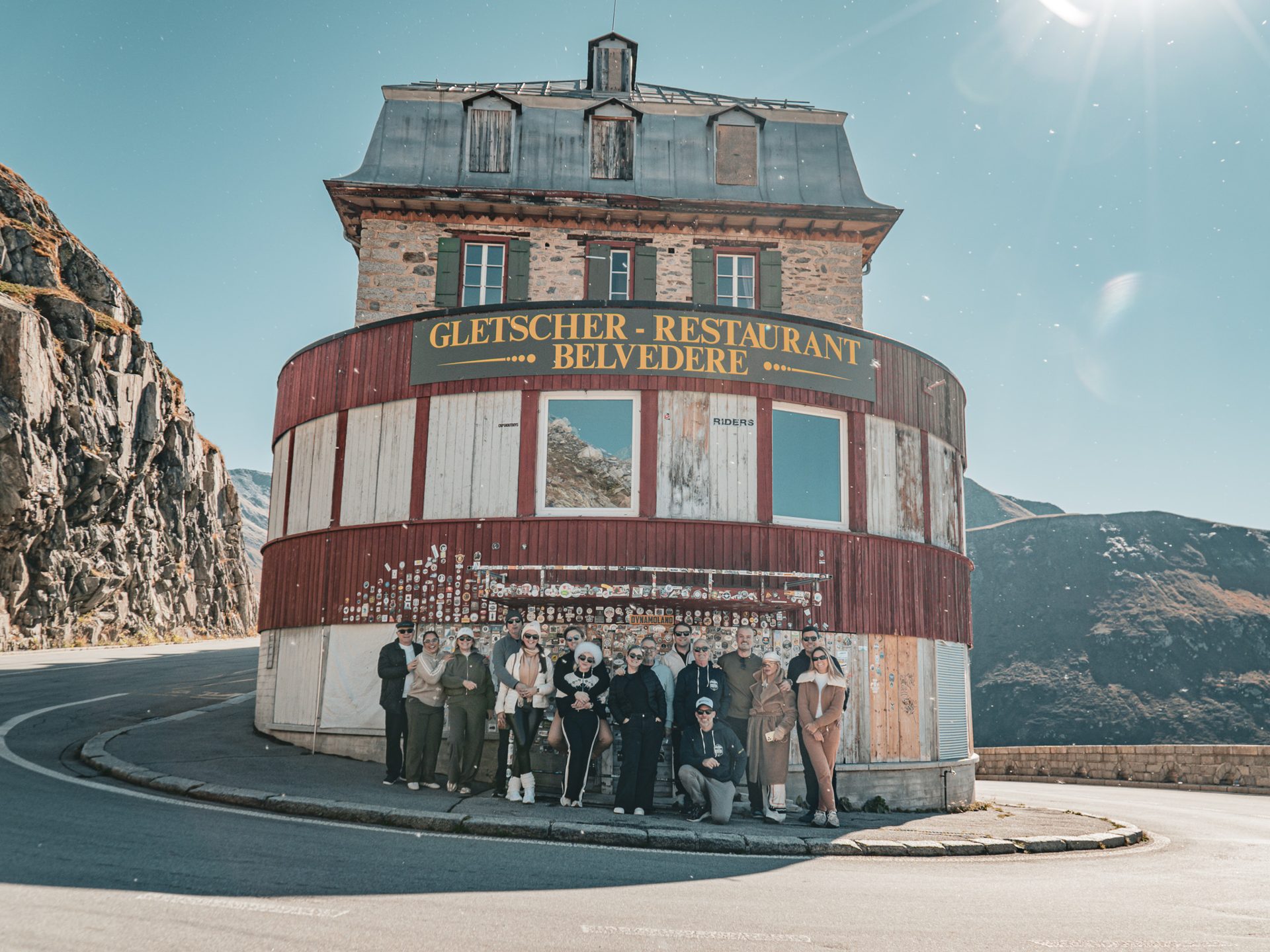
Past Andermatt comes Furka (2,429 m), and with it the image everyone recognises without knowing its name: the tight hairpin with the Hotel Belvédère planted in the middle of it and the Rhône glacier behind. This is where James Bond chased Goldfinger in 1964. The hotel has been closed for years, which has only made the spot more photogenic — and it is where the group shot the official photograph of the edition.
The day closes with Nufenen (2,478 m), the second-highest pass lying entirely within Switzerland, with lunch at the source of the river born from that ice and a long descent to Brissago.
San Bernardino, Viamala and Julier: the road into the Engadine
Day four trades altitude for history. Coffee among the three medieval castles of Bellinzona, a UNESCO World Heritage Site, then the climb up the historic San Bernardino (2,066 m) — the one with the corners, not the tunnel.
Then comes the Viamala, the 300-metre-deep gorge that medieval travellers named the “bad path”, and the Julier Pass, already in use in Roman times. The night is spent in St. Moritz, the village where in 1864 a bet by hotelier Johannes Badrutt invented winter tourism.
Stelvio: the 48 most famous hairpins in the world
Day five is the one everybody waits for. After crossing the Swiss National Park via the Ofenpass and a coffee stop in Glurns — Italy’s smallest walled town, 900 inhabitants inside intact walls — the road points at the Stelvio Pass (2,758 m).
The Stelvio was cut into the rock in 1825 by the engineer Carlo Donegani, and its northern face carries the 48 numbered hairpins that became its signature. Britain’s Top Gear once named it the greatest driving road in the world, and that is a hard case to argue with over lunch at the refuge perched directly above the switchbacks.
A practical note: by mid-October the Stelvio is close to its winter closure. That is precisely why it is empty — and precisely why ROX picks this window.
Gavia: the hardest road in the Giro d’Italia
Dropping into Bormio, the Gavia Pass (2,618 m) begins, and it is the Stelvio’s opposite: narrow, largely without guardrails, with stretches where two cars cannot pass side by side. It staged the most remembered day in Giro d’Italia history, the 1988 stage raced through a blizzard. The day ends in Bolzano, with Walther Square and the old town.
Sella Ronda and Passo Giau: the Dolomites in a day
Day six runs the full Grande Strada delle Dolomiti. Coffee facing Lago di Carezza, which Ladin legend calls the rainbow lake, then the Sella Ronda circuit: the Sella, Gardena, Campolongo and Pordoi passes, all circling the same massif.
The finale is Passo Giau, the most photogenic road in the Dolomites, ideally in late-afternoon light. The night is in Cortina d’Ampezzo, the Queen of the Dolomites, which had hosted the 2026 Winter Olympics only months before the group drove through.
Grossglockner: Austria’s highest Alpine road
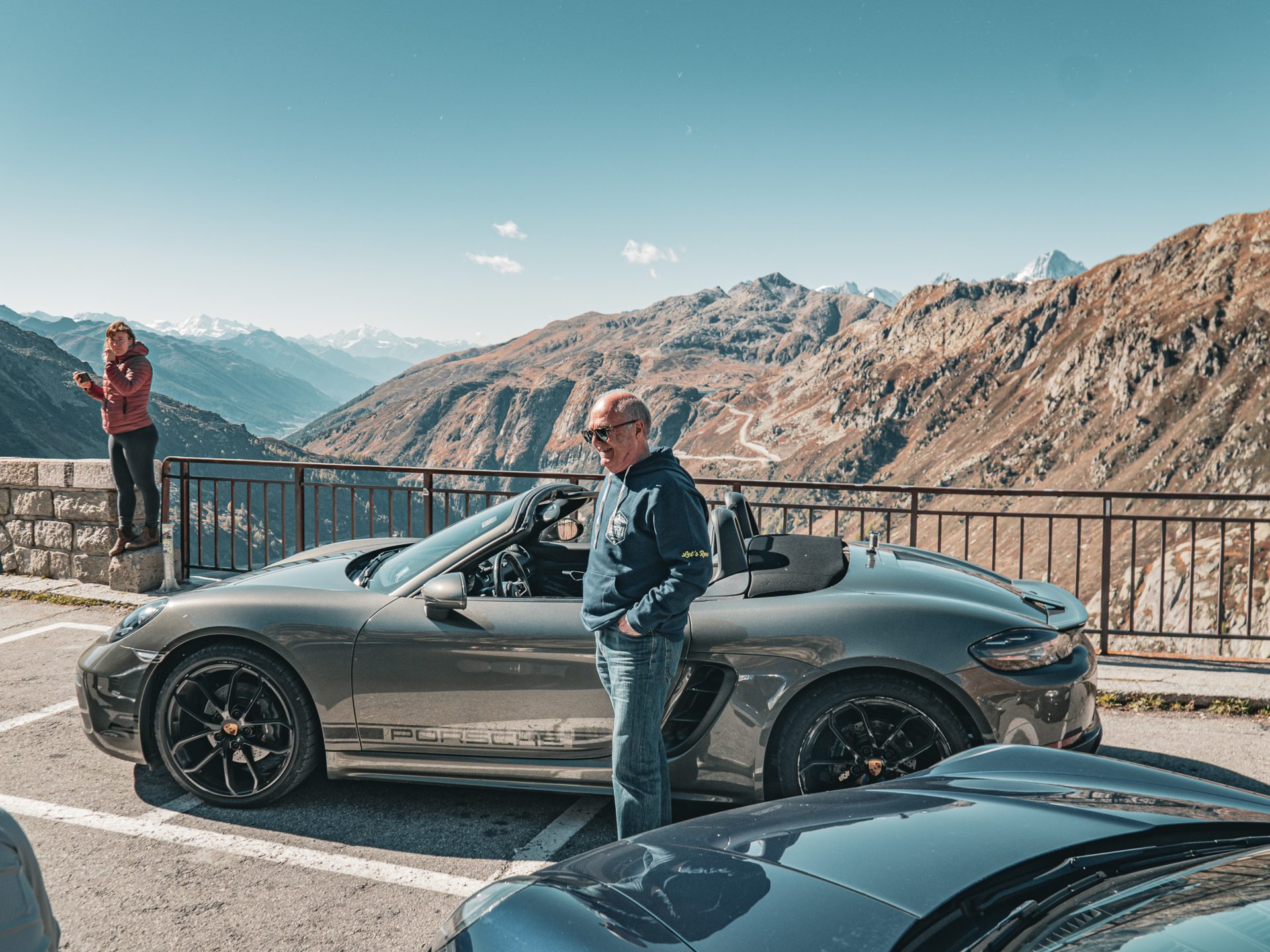
After a morning photo of the Tre Cime reflected in Lake Misurina, the route enters the Grossglockner Hochalpenstraße, built by 4,000 workers between 1930 and 1935 with an aim that sounds luxurious today: a road made for driving for its own sake.
There are two literal high points. The Pasterze glacier viewpoint, facing Austria’s highest peak (3,798 m), and the cobbled ramp of the Edelweißspitze (2,571 m), short, steep and first-gear steep at that. Dinner that night is two Michelin stars at Schloss Prielau, a lakeside castle in Zell am See.
Krimml, Gerlos and Kesselberg: the last mountain day
Day eight starts at the Krimml Waterfalls, Austria’s tallest at 380 metres over three drops, and continues through the fast sweepers of the Gerlos Alpenstraße. The descent through the Zillertal leads to the Seefeld plateau and Mittenwald, the village that has been making violins since 1684.
The close is thoroughly Bavarian: the turquoise Walchensee, nicknamed the “Caribbean of Bavaria”, and the Kesselbergstraße, a legendary hill-climb venue in the 1920s. Day nine still fits in Ettal Abbey, the photo stop at Neuschwanstein and Ulm before the farewell dinner in Stuttgart.
| Pass | Altitude | Country |
|---|---|---|
| Susten | 2,224 m | Switzerland |
| Furka | 2,429 m | Switzerland |
| Nufenen | 2,478 m | Switzerland |
| San Bernardino | 2,066 m | Switzerland |
| Stelvio | 2,758 m | Italy |
| Gavia | 2,618 m | Italy |
| Edelweißspitze (Grossglockner) | 2,571 m | Austria |
What makes a driving tour work
The visible part of a route like this is the roads. The part that decides whether it works is something else.
- A convoy with radios in every car. The lead guide calls corners, speed cameras, cyclists and changes of pace in real time — nobody drives staring at a GPS.
- A support vehicle. Luggage travels separately; only the day’s essentials ride in the Porsche.
- Paperwork already handled. Swiss and Austrian motorway vignettes, vehicle documents and international circulation authorisation are in each car from day one.
- Professional coverage. A dedicated photographer and drone operator for the whole route, with the material delivered to the group after the trip.
- A human pace. Departures between 08:00 and 10:00, lunches at the top of the passes and daily distances of 200 to 310 km — short enough to enjoy the driving rather than chase a schedule.
One weather caveat: mid-October is the end of the Alpine season. At 2,500 m the thermometer hovers around zero, below it with wind chill, while valleys climb to 10–16 °C in the afternoon. It is a tour with more cold than heat — and with far emptier roads because of it.
When is the next edition
The 2026 edition sold out. The next Legends of the Alps departure runs 17–26 September 2027, in the same small-group, single-departure format, and 2028 already has a date: 16–25 September.
Dates, inclusions and prices are on the Porsche Driving Tour of the Alps page.